Cognitive Structuralism ANDRBEL
ART Practice
ANDRBEL Research Program
* Access to reading some studies is temporarily closed until a certain phase of the research is completed.
Architecture of the ANDRBEL Research Program
| Research Program | Research Branch | Fundamental Process | Structural Object | What the research led to | Commercial products based on the results | Further artistic, curatorial and institutional development | |
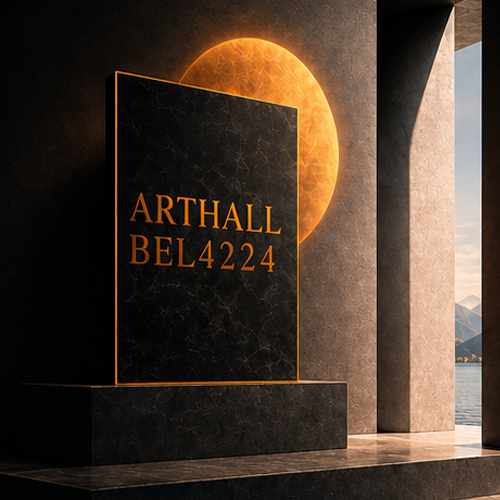
| Cognitive Structuralism AndrBel | Artistic Practice & Conceptual Systems | Artistic Investigation | Artistic Systems and Research Modules | ARTHALL BEL4224 MILAN; BEL4224 Gallery | - | Further artistic, curatorial and institutional development | |
| Cognitive Structuralism | Cognitive Structuralism and Artificial Intelligence (AI) | Emergence / Institutional Knowledge in AI | Cognitive Structures; Institutional Knowledge Structures | Independent IKB Standards Organization | CIKBIC | Further research into Knowledge Authority, Action Authority and institutional AI systems | |
| Artistic Continuity Infrastructure | Artist Legacy Infrastructure / Continuity Governance | Continuity | Continuity Structures | Artistic Continuity Infrastructure framework | MADO cod ART | Lecture courses and educational programs at educational institutions | |
| ADAS Framework Series | Cultural Digital Assets / DAP Research | Preservation | Ontological Structures & Preservation Dimensions | CDA Protocol; CDA Standards Organization | MADO cod ART | Further CDA standards, validation and institutional implementation | |
| AFM — AndrBel Framework Methodology | Structural Research Methodology | Knowledge Generation | Structural Knowledge / Preservation Dimensions | Structural Research Language; Research Design Workshop; methodological basis of CDA Protocol | MADO cod ART (where applicable) | Application and validation in research domains beyond CDA |
From Research to Institutional and Commercial Implementation
The ANDRBEL Research Program does not treat research as an isolated publication activity. Individual research directions may generate theoretical frameworks, methodologies, standards, independent institutional structures, educational programs, and commercial implementations.
These outcomes remain structurally distinct. Research establishes the intellectual and methodological foundation; independent organizations may support standards and institutional development; commercial projects may translate selected findings into operational products and infrastructure.
This separation allows research, institutional development, and commercial implementation to evolve through different governance structures while maintaining a documented intellectual lineage.
Artist AndrBel — https://andrbel.art
ARTHALL BEL4224 MILAN - https://arthallmilan.com
BEL4224 Gallery - https://bel4224.art
Independent IKB Standards Organization - https://ikbsai.org
CDA Standards Organization - https://cdastandard.org
CIKBIC - https://cikbicai.com
MADO cod ART - https://madocod.art
Research Institute AndrBel - https://andrbel.org
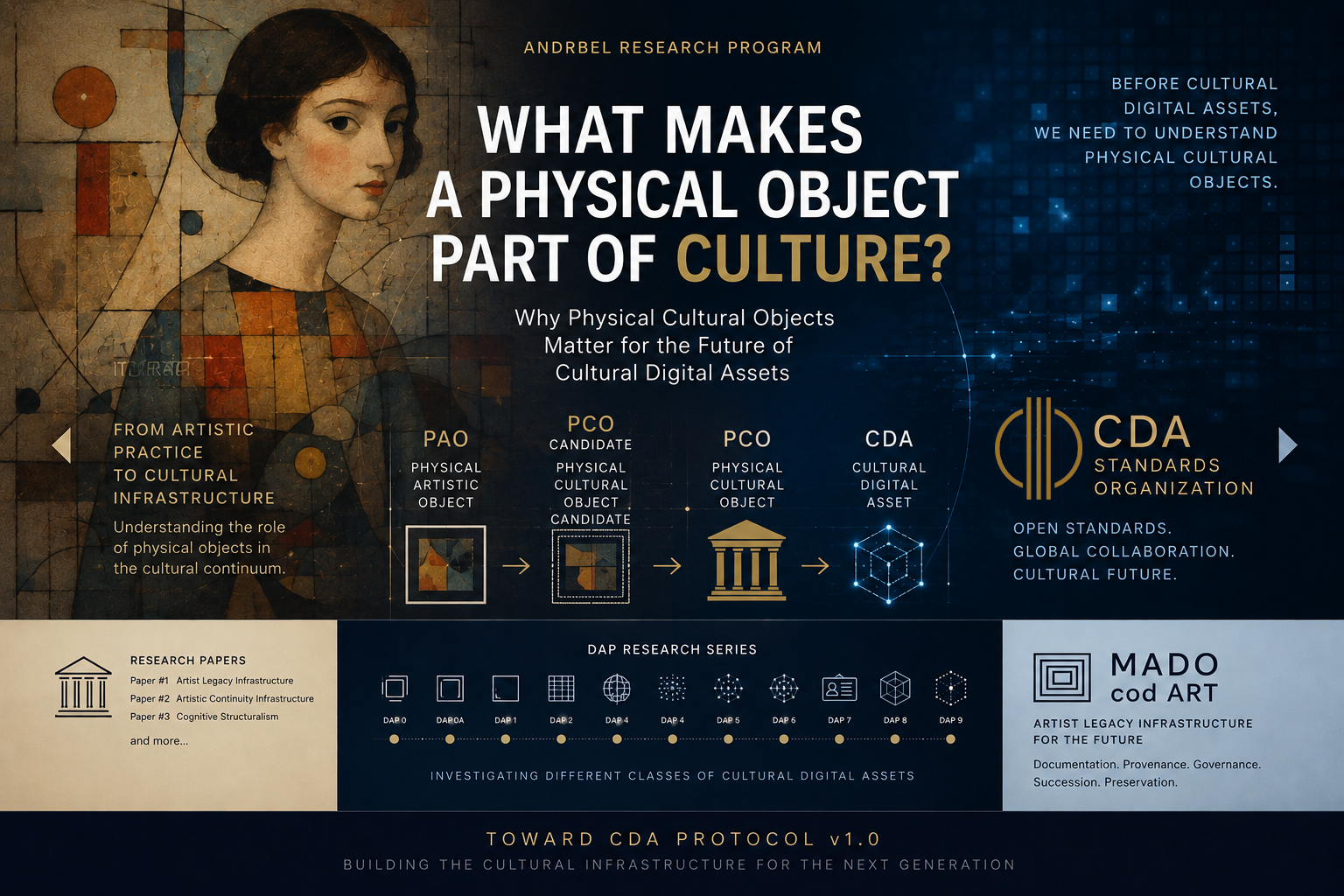
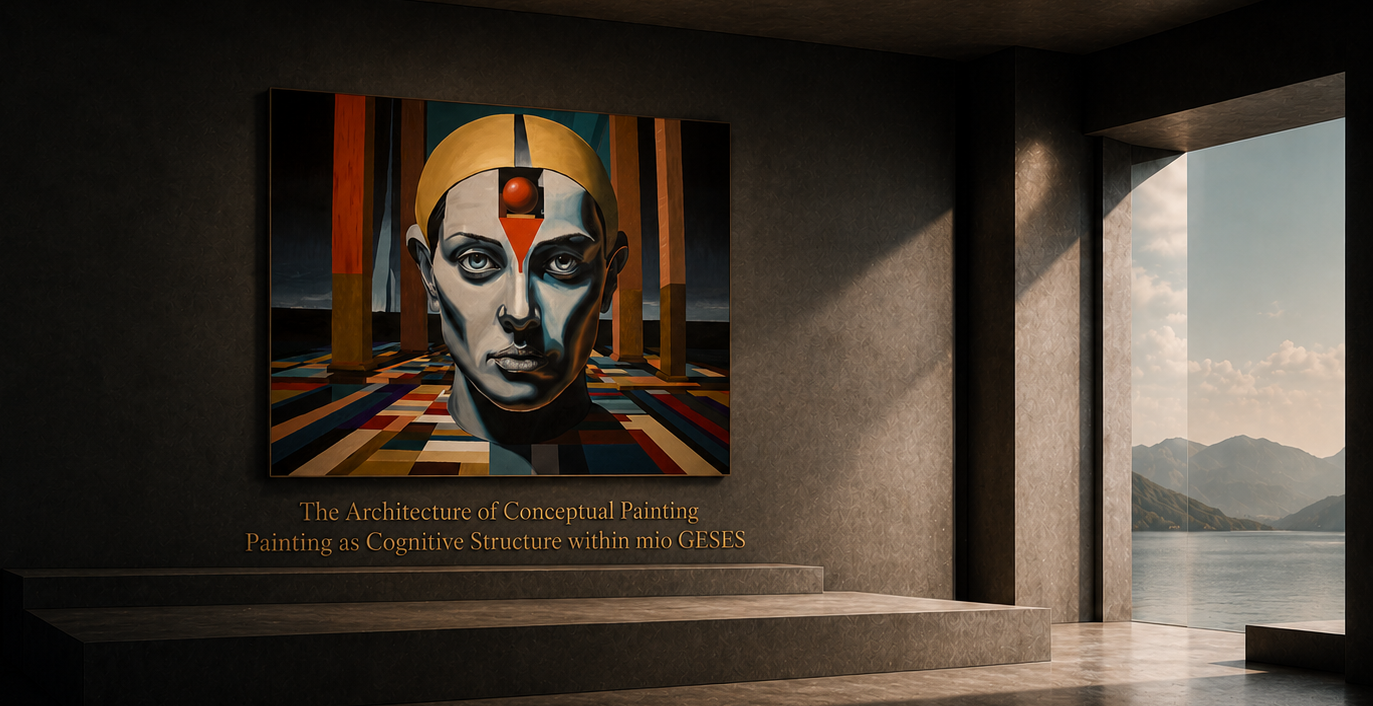
For many years, my primary work has been painting. My artistic practice was never separated from research. Every series, every system, and every body of work emerged from questions that painting itself could not fully answer.
Those questions gradually expanded beyond the canvas.
The first stage of this journey became Cognitive Structuralism—a research direction investigating how perception constructs reality through cognitive structures. Alongside this broader theoretical framework, Cognitive Structuralism AndrBel developed as the conceptual foundation of my own artistic practice, describing the systems, series, and structural logic that shape my work as an artist.
This research was later published through Research Catalogue as Cognitive Structuralism (Paper #3).
However, one question remained unanswered.
What happens to an artwork after it is created?
How does an artistic practice continue across time?
How can artistic continuity be preserved beyond documentation alone?
These questions led to two further studies.
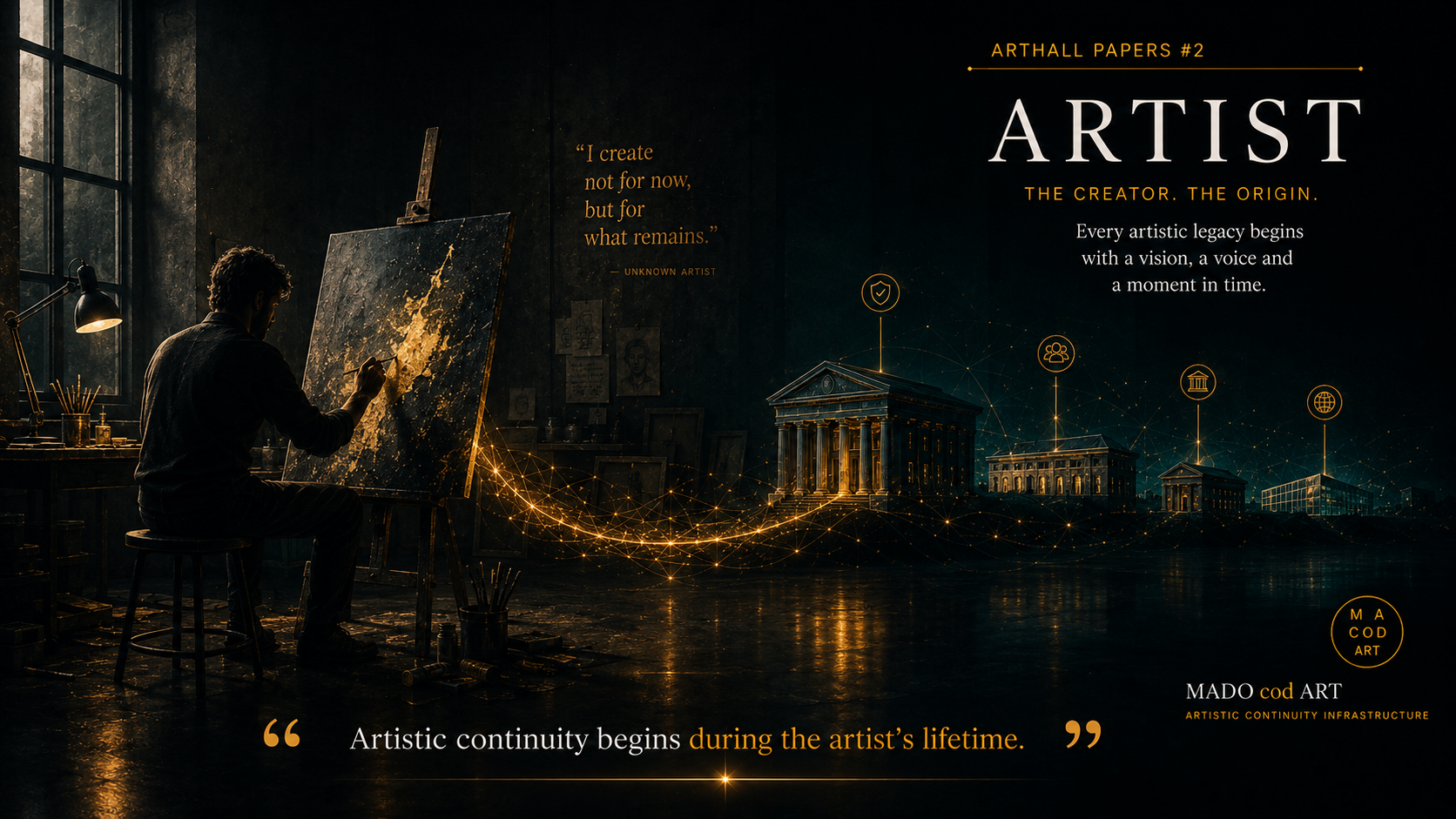
Paper #1 – Artist Legacy Infrastructure explored why an artist needs more than an archive.
Paper #2 – Artistic Continuity Infrastructure demonstrated that artistic legacy requires governance, continuity, and institutional structures rather than simple documentation.
As these investigations progressed, the focus gradually shifted from artistic practice itself toward the infrastructure that supports cultural continuity.
This transition gave rise to the ADAS Framework Methodology (AFM) and the broader ADAS Framework Series, introducing a structural methodology for investigating Cultural Digital Assets.
At this point, a much larger question emerged:
What actually constitutes a Cultural Digital Asset?
The answer turned out to be far more complex than simply connecting culture with blockchain technologies or NFTs.
Not every digital asset is cultural.
Not every NFT represents cultural value.
And not every digital representation of an artwork should automatically be considered a Cultural Digital Asset.
Understanding these distinctions required an entirely new research methodology.
This led to the development of the Digital Asset Profile (DAP) methodology.
Each DAP investigates one specific class of potential Cultural Digital Assets.
The research currently includes:
DAP 0 — foundational investigation;
DAP 0A — Physical Cultural Objects and Cultural Digital Assets;
DAP #1 — Native Digital CDA;
DAP #2 — Digital Representation CDA;
DAP #3 — Limited Digital Edition CDA;
DAP #4 — Native Digital Artwork CDA;
DAP #5 — Generative Edition CDA;
DAP #6 — Combinatorial Generative CDA;
DAP #7 — Institutional Artist Passport CDA;
DAP #8 and DAP #9, currently in development, investigate AI-generated digital and physical-digital cultural objects.
The purpose of these investigations is not to classify technologies.
It is to determine under which structural conditions a digital object becomes part of cultural infrastructure.
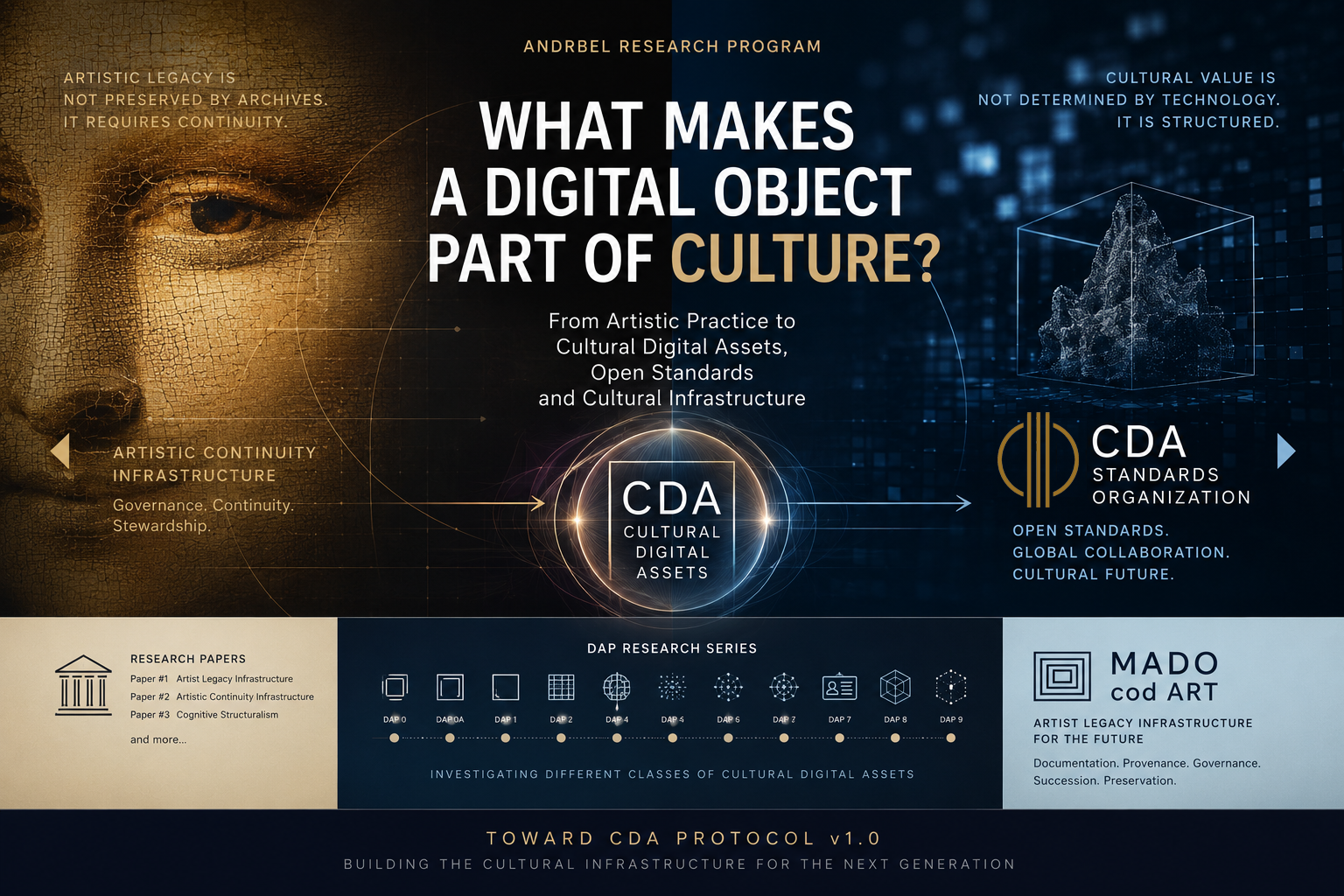
The cumulative findings of these investigations are being consolidated into CDA Protocol v1.0, a structural protocol intended to provide a consistent framework for identifying, evaluating, governing, and preserving Cultural Digital Assets.
As the research matured, another realization became increasingly clear.
If Cultural Digital Assets are to be understood through open, internationally applicable principles, the resulting protocol cannot remain attached to a single researcher, artwork, or implementation.
It requires an independent institutional environment capable of supporting future development, collaboration, and international participation.
This realization led to the establishment of the CDA Standards Organization, an independent initiative being developed to support the future evolution of open standards for Cultural Digital Assets. The organization emerged from the research but is intended to develop as an open institutional platform through collaboration with museums, galleries, cultural foundations, ministries of culture, research institutions, technology organizations, and other international participants.
In parallel, another practical question emerged:
How can these research principles become usable infrastructure for artists, collectors, institutions, and future generations?
This question is being addressed through MADO cod ART, a project developing practical systems for artistic continuity, cultural documentation, governance, provenance, succession, and long-term preservation.
Today, these research directions form an interconnected ecosystem rather than separate projects.
Cognitive Structuralism investigates how perception constructs reality.
Cognitive Structuralism AndrBel describes the structural foundations of my own artistic practice.
Artistic Continuity Infrastructure investigates how artistic practice continues through time.
The ADAS Framework Series investigates the structural properties of Cultural Digital Assets.
The DAP research series examines different classes of Cultural Digital Assets through empirical investigation.
CDA Protocol seeks to consolidate these findings into an open structural protocol.
The CDA Standards Organization provides the institutional environment for the future evolution of these standards.
MADO cod ART transforms research into practical cultural infrastructure.
Together, these components form The Cultural Research Ecosystem of the ANDRBEL Research Program.
The program did not begin with an intention to create a protocol, a standards organization, or an infrastructure project.
It began with questions arising from artistic practice.
Each answer generated new questions.
Each investigation revealed new structural relationships.
Over time, what began as research into painting evolved into a broader investigation of continuity, governance, digital culture, and institutional infrastructure.
The ANDRBEL Research Program continues to develop through the same principle that initiated it:
Every answer should generate a better question.
Learn more
ANDRBEL Research Program
https://andrbel.art/concepttheory/ANDRBEL_Research_Program/
Research Portfolio
https://www.singulart.com/en/artist/andr-bel-66348
CDA Standards Organization
https://cdastandard.org/
MADO cod ART
https://madocod.art/
DEEP RESEARCH LAYER
ANDRBEL Research Program
ADAS Framework Series
DAP Research Series
Comparative Analysis
SKM
AFM v2.0
AFF
↓
NORMATIVE LAYER
CDA Protocol
↓
INSTITUTIONAL LAYER
CDA Standards Organization
↓
IMPLEMENTATION LAYER
MADO cod ART
↓
USER VALUE
Artists
Galleries
Museums
Collectors
Estates
Auction Houses
Foundations
Platforms
The research should not be simplified. Its interface should be simplified.
For the outside world, the first visible result of the research is to be the CDA Protocol. The first clear proof of its practical necessity—MADO cod ART.
| Research Program | Central question | Central object | |
| Cognitive Structuralism | How does reality emerge? | Reality | |
| Artistic Continuity Infrastructure | How does artistic practice persist? | Practice | |
| ADAS Framework Series | How does cultural infrastructure endure? | Infrastructure | |
| AFM — AndrBel Framework Methodology | How is structural knowledge generated? | Knowledge |
Accordingly, the broader research program investigates four complementary structural processes governing the existence of cultural systems:
Four interconnected processes:
Research Program
↓
Research Object
↓
Research Methodology
↓
Framework
↓
Theory
The program includes five interconnected levels:
AFM, SRL, Glossary
| Document | Central Question | Function | |
| AFM | How do we investigate? | Methodology | |
| SRL | How do we communicate Structural Research? | Conceptual language | |
| ADAS Glossary | What does each structural concept mean? | Terminological reference |
Research Program
Cognitive Structuralism ANDRBEL
ART Practice
Cognitive Structuralism
Research Object
↓
Cognitive Structures
Research Methodology
↓
(future CS methodology)
Artistic Continuity Infrastructure
Research Object
↓
Continuity Structures
Research Methodology
↓
(future ACI methodology)
ADAS
Research Object
↓
Structural Properties
Preservation Dimensions
Research Methodology
↓
AFM
│
▼
(Theory)
│
▼
ARTHALL Papers #4
Research Program
│
▼
Evolution of the ADAS Framework Series
│
▼
Structural Research Language (SRL)
│
▼
AFM — A Methodology for Structural Research
(Methodology)
│
▼
ADAS Framework Series v1.0
(Theory)
AUF #1
AGF #1
ASF #1
ATF #1
AIF #1
ACF #1
│
▼
ADAS Glossary
│
▼
DAP 0 - Foundations of Cultural Digital Assets
│
▼
│
▼
Research Applications / Demonstration and Validation Projects
DAP #1
DAP #2
DAP #3
DAP #4
DAP #5
DAP #6
DAP #7
│
▼
CDA Protocol v1.0
│
▼
Real Cultural Infrastructure
CDA Standards Organization
MADO cod ART
The first full version of the ADAS Framework Series v1.0 has been completed, including:
Importantly, the theory is not declared universal without justification. On the contrary, it maintains an academic caution: its Initial Research Domain remains Cultural Digital Assets, while its applicability to museums, archives, universities, foundations, and other cultural institutions is defined as an Extended Application Domain, open to further research and testing.
A Structural Class is an ontological category of Cultural Digital Assets distinguished by the manner in which cultural identity originates, is represented, or is institutionally maintained within a Trusted Cultural Ecosystem.
The Structural Classification of Cultural Digital Assets is determined by the origin and structural identity of the cultural asset rather than by the digital technologies through which it is implemented.
I. Ontological Classification
II. Functional Classification
Structural Emergence is the progressive formation of the Ontological Foundation through which a digital object acquires the identity of a Cultural Digital Asset.
The identity of a Cultural Digital Asset develops progressively through the establishment of complementary Structural Properties rather than through instantaneous technological creation.
The entire program develops from artistic practice to institutional cultural infrastructure:
Artistic Practice →Cognitive Structuralism AndrBel
↓
Cognitive Structuralism→(Cognitive Structuralism in other areas)→Cognitive Structuralism AI
↓
Artist Legacy Infrastructure
↓
Artistic Continuity Infrastructure
↓
ADAS Framework Series
↓
DAP Research Series
↓
Comparative Synthesis
↓
CDA Protocol v1.0
↓
CDA Standards Organization
↓
Independent Implementations (MADO cod ART)
4. Classification model
Ontological, functional, and possibly relational or implementation classifications.
5. Minimum CDA Record
Required and optional fields.
6. Research relationship
How the DAP Research Record relates to the registered CDA Record.
7. Governance requirements
Responsibility, authority, stewardship, succession, revision, dispute, and transfer.
8. Trust and verification requirements
Evidence, provenance, authenticity, disclosure, security, and review.
9. Utility documentation
Not a promise of utility, but a documented cultural function.
10. Economic structure disclosures
Economic architecture without assessing investment attractiveness.
11. Interoperability
Transferability and preservation of structural identity between systems.
12. Preservation and continuity
Technical, institutional, and semantic continuity.
13. Conformance model
What does conformance to Protocol v1.0 mean?
14. Versioning and lifecycle
How the Protocol evolves and how previous versions are preserved.
The Protocol does not define cultural value.
The Standards page already sets the correct limit:
The CDA Protocol must not:
ANDRBEL Research Program
generates research and structural knowledge
↓
CDA Standards Organization
evaluates, governs, and standardizes
↓
Independent Implementations
apply the standard
DAP 0
↓
DAP 0A
Physical Cultural Objects and Cultural Digital Assets
↓
DAP #1–#7
Foundational CDA Cases
↓
DAP #8–#9
Boundary CDA Cases
↓
Comparative DAP Analysis
↓
Structural Knowledge Matrix
↓
AFM v2.0
↓
ADAS Foundation Framework
↓
CDA Protocol v1.0
↓
CDA Standards Organization
↓
Independent Implementations
├── MADO cod ART
└── Other Independent Implementations
Artistic Practice
generates questions
↓
Research Frameworks
generate structural concepts
↓
DAP Investigations
generate case-based findings
↓
Comparative Analysis
identifies recurring and bounded patterns
↓
Structural Knowledge Matrix
organizes validated structural knowledge
↓
CDA Protocol
translates stable findings into shared requirements
↓
CDA Standards Organization
governs their independent institutional evolution
↓
Independent Implementations
apply the standard in practice
The ANDRBEL Research Program generates knowledge. The CDA Protocol translates stable knowledge into shared structural requirements. The CDA Standards Organization provides the independent institutional environment through which those requirements may evolve over time.
* Access to reading some studies is temporarily closed until a certain phase of the research is completed.
Support independent artistic research in Cognitive Structuralism, conceptual painting, and long-term cultural infrastructure development.
[Support Research]
The ANDRBEL Research Program is an ongoing interdisciplinary artistic research initiative developed by AndrBel.
All conceptual frameworks, research architectures, methodologies, diagrams, visual systems, terminologies, and written materials presented within the Program form part of an evolving body of artistic research.
© AndrBel, 2025–Present. All rights reserved.
For academic reference, citation is permitted with proper attribution.
Commercial implementation, derivative institutional development, or commercial reuse of the presented research frameworks requires prior written permission.